About Us
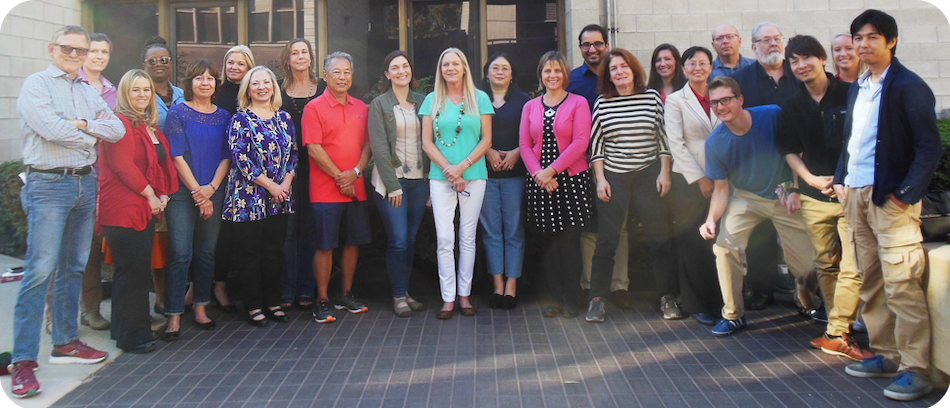
The UC San Diego Anesthesiology Research Laboratory (ARL) was organized in 1989 to:
- perform research into the pharmacology and physiology of systems relevant to pain and analgesia
- provide training opportunities for undergraduate and graduate students and post-graduates
- establish contract research in areas of developed expertise
Our group has a long and active history of investigation, both preclinical and clinical, into new technologies and drug development. The strength of the group is its high level of scientific competence and its proven contract organization. Since 1989, the Anesthesiology Research Laboratory (ARL) faculty have jointly published over 500 papers and chapters (Web of knowledge, 2018), and have had over 100 post-graduate trainees from around the world.
Research is funded by 3 mechanisms: NIH grants, research contracts, and research recharge agreements. Contracts and recharge agreements are carried out under protocols approved by for-profit sponsors and accomplished by full-time university employees. Recharge activities permit services to be undertaken with protection of sponsor intellectual property.
The Yaksh lab was established in 1989 to undertake research on the biology of pain and analgesia. It has had an active presence at UCSD as evidenced by the fact that since 1989, the laboratory has published over 650 papers and chapters. This work at UCSD over the years reflects the contributions of over 100 post baccalaureate laboratory fellows. The present research endeavors by Dr. Yaksh, the research fellows, technicians and inter-institutional collaborative activities funded by multiple NIH/DOD grants, focus on nociceptive processing and its regulation. Several current areas of focus and interest may be noted.
- TLR 4 Lipid rafts-the inflammaraft . Membrane lipid rafts are an organizational nidus for membrane channels, receptors and enzymes that regulate cellular excitability. The TLR4-raft subtype are localized in spinal microglia, and DRG macrophages/nociceptors. TLR4-rafts can transform from labile membrane structures into persistent complexes supporting formation of homo / hetero dimers of channels and receptors. Our focus is to define the role of these raft complexes and their regulation in pain (PMID: 39414176; PMID: 36719418).
- Circulating immune complexes in the chronic pain states and the dorsal root ganglion system. Pathological states such as arthritis and fibromyalgia are characterized by circulating immune complexes (IC) which gain access to the dorsal root ganglia though the DRG-vascular barrier to affects DRG macrophages and satellite cells to initiate and enhance afferent activity. Characterization of these ICeffects are a key focus of our research (PMID: 38117255).
- Virally initiated pain states. Virally-associated pain states can drive transcriptional changes in inflammatory cells and sensory afferents and initiate pain phenotypes. We have an interest in these associated pain states and the pharmacology of the how that pain state may be regulated. (PMID: 39958365)
- Voltage gated sodium channels. Nav 1.7 sodium channels expressed in afferent nociceptors, typically in lipid rafts, are an effective target for pain control. Our focus is on spinal platforms to reduce NaV1.7 expression and binding to define disease modifying effects of channel regulation on joint inflammation, bone modeling and pain. (PMID: 33692134).
- Social stress and pain processing. Environmental stress can lead to changes in the pain phenotype (e.g. nociplastic pain). We focus on the biology and pharmacology of these pain states, considering the role of circulating factors/adaptive immune signaling and intrinsic connectivity (e.g. bulbospinal pathways) (PMID: 40072079 )
- Sensory innervation of the skin and peripheral cell systems. Antidromic activity in nociceptive afferents releases afferent transmitters that have profound effects upon trophic functions of skin tissues, drives activity in inflammatory/immune cells and affects innervated tumors. Characterization of these multiple effects is of particular interest (PMID: 29423889)
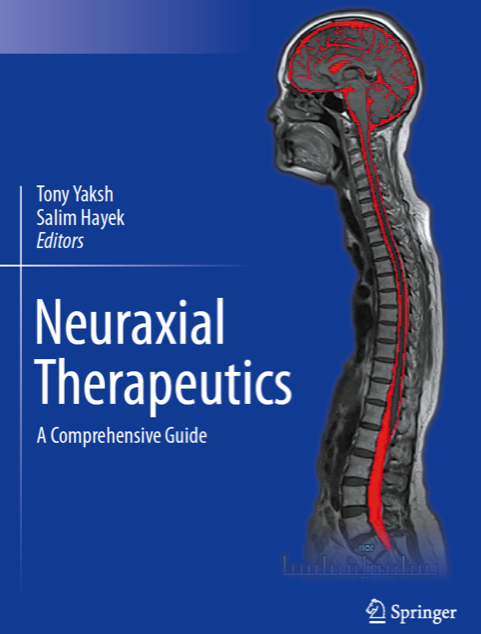
- Neuraxial drug delivery. Pain, spasticity, neurodegeneration and cancers often have a spinal focus. Spinal (intrathecal/epidural ) delivery may be a useful delivery option. Spinal therapeutics face two issues: limited pericatheter redistribution and limited rostrocaudal redistribution. A root solution is achieved by enhancing solute exit velocity and enabling an even distribution of injectate exit along the length of the catheter though use of calibrated slits which function as normally closed valves distributed along the catheter that open when the pressure exerted by the column of fluid in the catheter exceeds the transmural pressure required to open the distributed valves.
- Use of human cells in defining system function and action. Work with human derived cells to create nociceptor assemblies and DRGs obtained from spine surgery and organ harvest, the use of microfluidic chambers to drive sprouting and allowing studies on soma and dendrites to undertake patch clamping and calcium imaging of DRG soma in the presence of co cultures of macrophages, osteoblast and cancer cell is an approach of considerable evolving interest to our group.
Mailing Address
UC San Diego
Anesthesia Research Lab
9500 Gilman Drive, Mail Code 0818
La Jolla, CA 92093
(619) 543-3597
(619) 543-6070 (fax)
Lab Director
Tony Yaksh, PhD